

Holy Week is the Church's most sacred week of the year.
It begins with Palm Sunday (March 29, 2026) and reaches its highest point in the Sacred Triduum—Holy Thursday, Good Friday, and the Easter Vigil—before culminating in the joy of Easter Sunday (April 5, 2026).
For many Catholics, Holy Week feels both familiar and overwhelming. We know it's important. We want to be present for it. But the rhythm of services, the shift in tone from one day to the next, and the sheer spiritual weight of the week can leave us unsure of how to enter in.
This guide provides the dates, the meaning, and a simple way to pray through Holy Week—whether you attend every service at your parish or pray quietly at home.
Holy Week 2026: Key Dates at a Glance
| Date | Observance | What Happens |
|---|---|---|
| Sunday, March 29 | Palm Sunday of the Passion of the Lord | Jesus enters Jerusalem; palms are blessed; the Passion is read |
| Thursday, April 2 | Holy Thursday | Evening Mass of the Lord's Supper; Adoration follows |
| Friday, April 3 | Good Friday | Celebration of the Lord's Passion; fasting and abstinence |
| Saturday, April 4 | Holy Saturday & Easter Vigil | The Easter Vigil begins after nightfall—the Church's holiest night |
| Sunday, April 5 | Easter Sunday | The Resurrection of the Lord |
Download the full Holy Week 2026 guide as a printable PDF: Download PDF
How to Pray the Rosary During Holy Week
The rosary is one of the most powerful prayers for entering into the mysteries of Holy Week. Here's a simple guide for which mysteries to pray on which days:
Palm Sunday (March 29): Sorrowful Mysteries
Meditate on Jesus' Agony, Scourging, Crowning with Thorns, Carrying of the Cross, and Crucifixion.
Holy Thursday (April 2): Luminous or Sorrowful Mysteries
During the day: Pray the Luminous Mysteries, focusing on the fifth mystery—the Institution of the Eucharist. This is the mystery we celebrate at Mass that night.
During Adoration (after Mass): Switch to the Sorrowful Mysteries, focusing on the Agony in the Garden. Stay with Jesus as he prays alone.
Good Friday (April 3): Sorrowful Mysteries
Pray all five decades. Let each mystery bring you deeper into the Passion.
Holy Saturday (April 4, morning): No specific mysteries—this is a day of waiting. Some people pray the Joyful Mysteries in anticipation of the Resurrection.
Easter Vigil & Easter Sunday (April 4-5): Glorious Mysteries
The Resurrection, Ascension, Descent of the Holy Spirit, Assumption, and Coronation of Mary.
Palm Sunday of the Passion of the Lord (March 29, 2026)
What Happens
Palm Sunday begins with joy—Jesus enters Jerusalem, and the crowds wave palm branches and shout "Hosanna!" But the celebration turns solemn quickly. The same Mass includes the proclamation of the Passion—the long Gospel reading that recounts Jesus' betrayal, trial, and death.
This tension is intentional. Palm Sunday shows us that the road to glory passes through suffering. The palms we carry are both a sign of triumph and a reminder of what is coming.
How to Be Present
Many parishes distribute palms and invite the congregation to process into the church (or gather outside before Mass). If you can, arrive a few minutes early.
If you cannot attend Palm Sunday Mass, you can still observe the day at home:
- Read the Passion narrative (Matthew 26-27, Mark 14-15, Luke 22-23, or John 18-19)
- Pray the Sorrowful Mysteries of the rosary
- Reflect on what it means to follow Christ when the path becomes difficult
Holy Thursday (April 2, 2026)
What Happens
Holy Thursday marks the beginning of the Sacred Triduum, the Church's three holiest days.
The Evening Mass of the Lord's Supper commemorates the Last Supper, when Jesus gave us the Eucharist and washed the disciples' feet. Many parishes reenact the washing of feet during the liturgy.
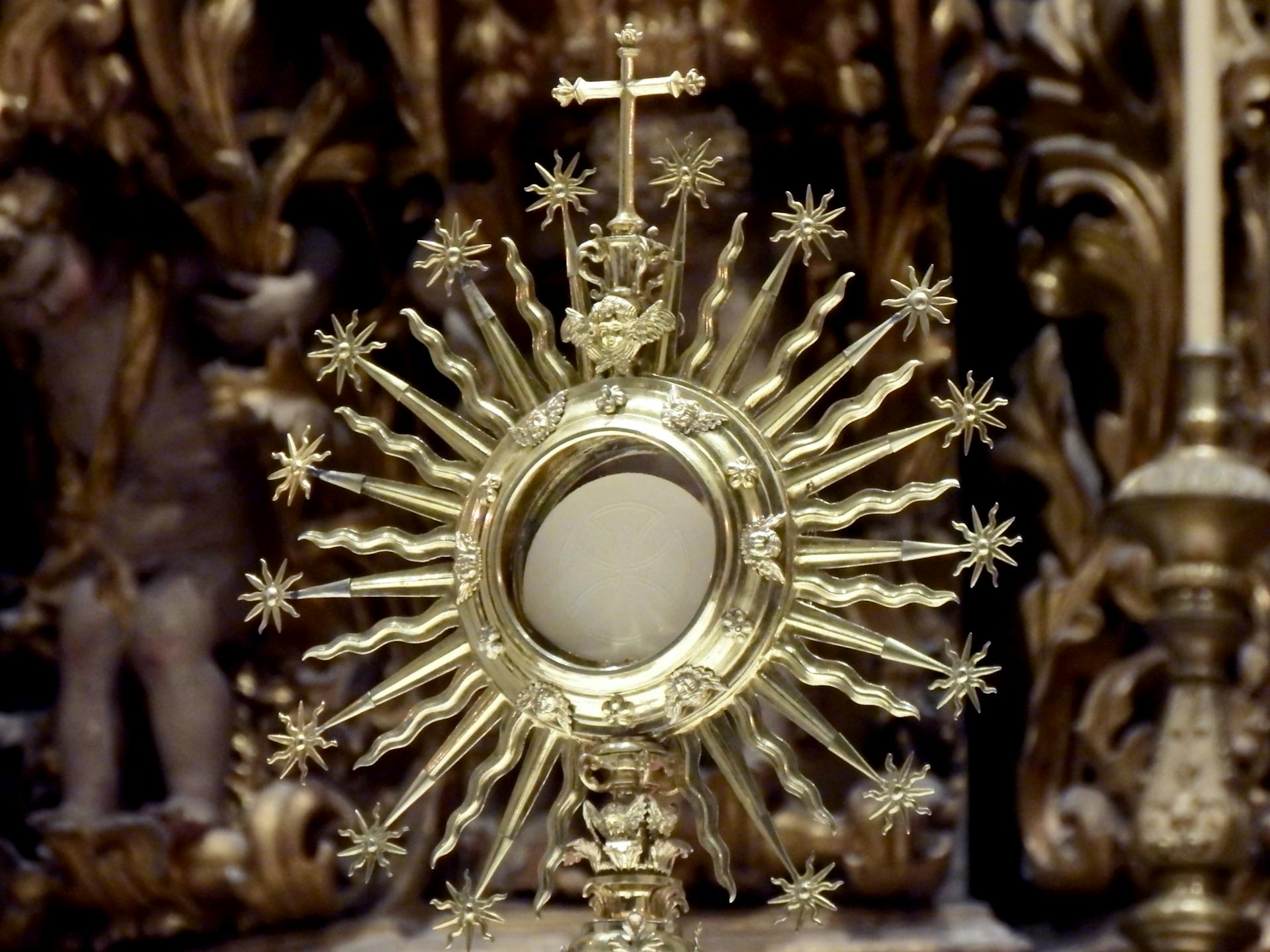
After Mass, the Blessed Sacrament is carried in procession to a place of repose, and the faithful are invited to remain in prayer—a vigil that echoes Jesus' words in the Garden of Gethsemane: "Could you not keep watch with me for one hour?" (Matthew 26:40)
How to Be Present
If you attend the Mass, stay for at least part of the Adoration that follows. Even fifteen minutes of silent presence is an act of solidarity with Christ.
If you cannot attend, spend time at home reading John 13-17 (the Last Supper discourse) and praying the rosary slowly, meditating on the Agony in the Garden.
Good Friday (April 3, 2026)
What Happens
Good Friday is the only day of the year when the Church does not celebrate Mass.
Instead, the faithful gather for the Celebration of the Lord's Passion, which includes:
- The proclamation of the Passion (John 18-19)
- Solemn intercessions for the whole world
- Veneration of the Cross
- Holy Communion (from hosts consecrated on Holy Thursday)
Good Friday is a day of fasting and abstinence. The Church asks us to eat less, to feel our hunger, and to let that physical emptiness remind us of the spiritual void that only Christ can fill.
How to Be Present
Attend the Celebration of the Passion if you can. Many parishes also pray the Stations of the Cross on Good Friday afternoon—a powerful devotion that walks through Jesus' final hours step by step.
If you cannot attend, you can pray the Stations at home, or simply sit before a crucifix and pray the Sorrowful Mysteries.
The goal is not to "get through" Good Friday. The goal is to remain with Christ in his suffering—to let the weight of the Cross settle over you, even if only for an hour.
Holy Saturday & the Easter Vigil (April 4, 2026)
What Happens
Holy Saturday is a day of waiting.
There is no Mass in the morning. The church is stripped bare. The tabernacle stands empty. The faithful wait in silence for the Resurrection.
Then, after nightfall, the Easter Vigil begins—the Church's most ancient and solemn liturgy.
The Vigil includes:
- The lighting of the Paschal candle (Christ, the Light of the World)
- The Liturgy of the Word (up to nine readings, tracing salvation history from creation to resurrection)
- The Liturgy of Baptism (adults and children are baptized and confirmed; all present renew their baptismal promises)
- The Liturgy of the Eucharist (the first Mass of Easter)
The Church is clear: the Easter Vigil should take place at night—after dark—so that the lighting of the candle is not symbolic but real. We move from darkness into light.
How to Be Present
If you have never attended the Easter Vigil, this is the year.
It is long (often two hours or more). But it is the heart of the Church's year. Every baptismal promise, every Alleluia, every lit candle passed from person to person is a proclamation: Christ is Risen. Death is defeated. Hope wins.
If you cannot attend, light a candle at home after dark, read the Resurrection account (Matthew 28, Mark 16, Luke 24, or John 20), and pray the Glorious Mysteries.
Easter Sunday (April 5, 2026)
What Happens
Easter Sunday is the Church's greatest feast—the celebration of the Resurrection of Jesus Christ.
The joy that began at the Vigil continues through Easter Sunday and extends for fifty days until Pentecost. This is not a single day of celebration. It is a season.
How to Be Present
Attend Mass. Celebrate with your family. Rest. Let the joy settle in.
And if you prayed through Holy Week—if you stayed with Christ through the darkness—let Easter be the reward. You walked with him to the Cross. Now you walk with him out of the tomb.
How to Pray the Rosary During Holy Week
The rosary is one of the most powerful prayers for entering into the mysteries of Holy Week. Here's a simple guide for which mysteries to pray on which days:
Palm Sunday (March 29): Sorrowful Mysteries
Meditate on Jesus' Agony, Scourging, Crowning with Thorns, Carrying of the Cross, and Crucifixion.
Holy Thursday (April 2): Sorrowful Mysteries (focus on the Agony in the Garden)
After the Mass, during Adoration, pray slowly—one decade at a time—and remain in silence between mysteries.
Good Friday (April 3): Sorrowful Mysteries
Pray all five decades. Let each mystery bring you deeper into the Passion.
Holy Saturday (April 4, morning): No specific mysteries—this is a day of waiting. Some people pray the Joyful Mysteries in anticipation of the Resurrection.
Easter Vigil & Easter Sunday (April 4-5): Glorious Mysteries
The Resurrection, Ascension, Descent of the Holy Spirit, Assumption, and Coronation of Mary.
Adoration Rosaries for Holy Week
If you're looking for a rosary designed for slower, more contemplative prayer—especially during Adoration or the quiet moments of Holy Week—Adoration Rosaries are crafted for exactly this purpose.
The weight slows your hands. The crucifix draws your eyes back to Christ. Angels in adoration model the posture: attentive, reverent, still.
These rosaries are made to be prayed with during the holiest moments of the Church's year—and to remain with you long after Easter.
One Final Thought
Holy Week is not a test.
You do not have to attend every service. You do not have to pray perfectly. You do not have to feel spiritually transformed by the end of it.
But if you can—stay.
Stay with Christ in the garden.
Stay at the foot of the Cross.
Stay in the darkness of Saturday.
And when the light breaks on Easter morning, you will know why you stayed.
Download the Holy Week 2026 Guide (PDF): Download Here
Explore Adoration Rosaries: View Collection
1 comment
Betty lake
Thank you!
Thank you!