A Guide for Beginners
If you've ever walked past a Catholic church and seen people sitting quietly before a golden vessel on the altar, you've witnessed Eucharistic Adoration.
This guide explains what it is, why Catholics practice it, and how to begin.
What Is Eucharistic Adoration?
Eucharistic Adoration is spending time in prayer before the Blessed Sacrament—the consecrated host, which Catholics believe is the real presence of Jesus Christ.
During Mass, bread and wine are consecrated and become the Body and Blood of Christ. After Mass, the consecrated host is kept in the tabernacle. During Adoration, the host is either kept in the tabernacle or placed in a monstrance (a decorative vessel with a glass window) and displayed on the altar.
Catholics believe Christ is truly present in the Eucharist. Adoration is spending time with Him.
Why Catholics Practice Adoration
As Catholics, we practice Adoration to be present with Christ, without distraction or pressure.
There are no required prayers, though many Catholics use traditional Adoration prayers such as O Salutaris Hostia, Tantum Ergo, and the Divine Praises—especially during Benediction. (You can find these prayers and more in our guide: Traditional Catholic Adoration Prayers)
You are also free to:
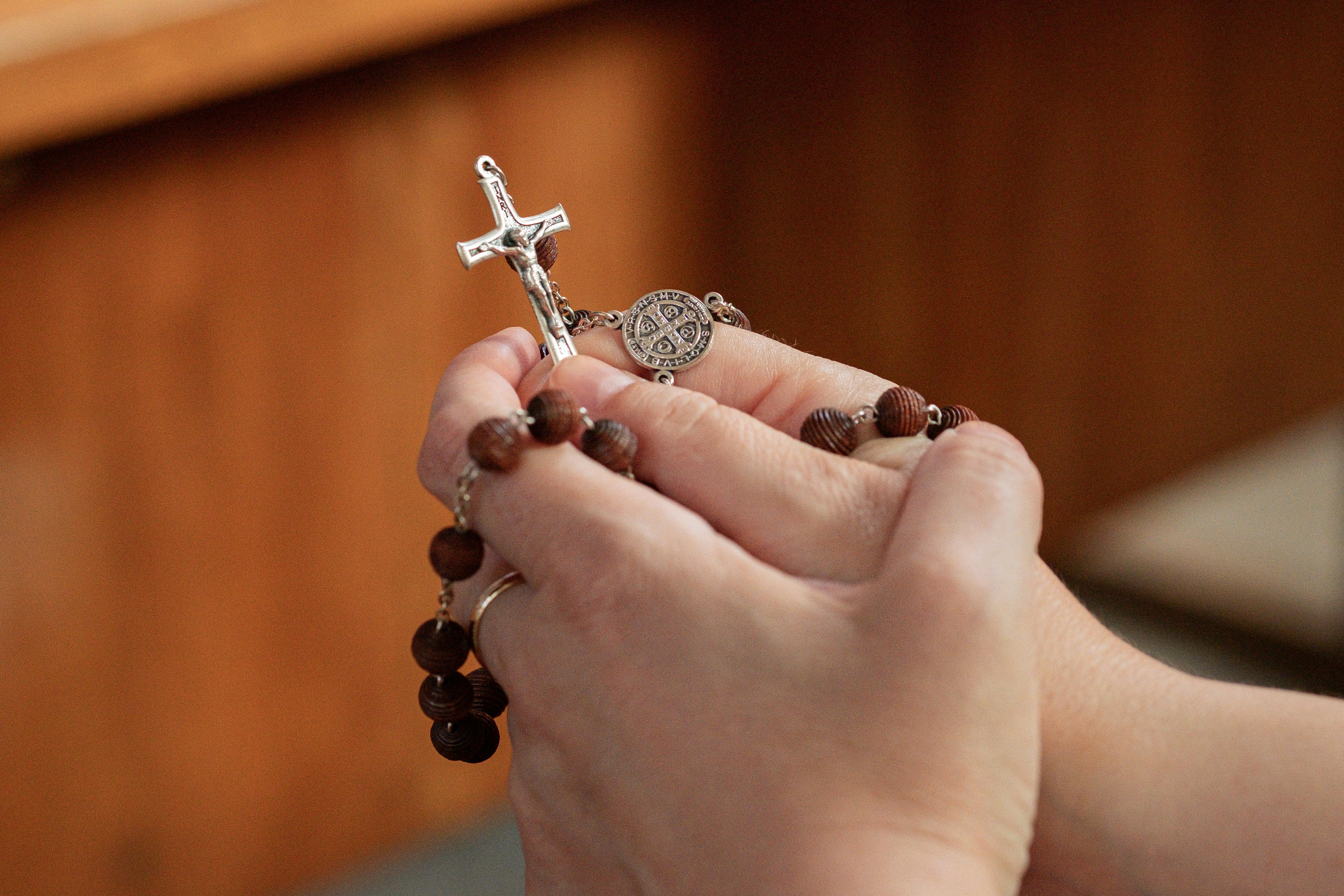
- Pray the rosary
- Read Scripture
- Intercede for others
- Sit in silence
The purpose is simple: to remain with Jesus.
What to Expect in an Adoration Chapel
If you visit an Adoration chapel, here is what you will likely encounter:
The Blessed Sacrament will either be in the tabernacle (a locked box on or near the altar, often marked by a candle) or exposed in a monstrance on the altar.
Silence is observed. Adoration chapels are kept quiet to allow for prayer and reflection. If you need to speak, whisper.
Genuflection is customary. When you enter or leave, Catholics genuflect (briefly kneel on one knee) toward the Blessed Sacrament as a sign of reverence. If you are unable to genuflect, a bow is also respectful.
Posture is flexible. You may sit, kneel, or stand. There is no required posture. Many people kneel for part of their time and sit for the rest. Do what allows you to pray best.
No set prayers are required. You are free to pray however you feel called—silently, with a rosary, by reading Scripture, or simply resting in God's presence.
You may come and go. Some people spend an hour in Adoration (called a "Holy Hour"). Others stay for fifteen minutes. Both are valid. There is no minimum or maximum time.
Eucharistic Adoration for the Homebound
Not everyone can travel to an Adoration chapel. The elderly, homebound, disabled, and those living in rural areas without nearby parishes face real barriers.
If You Receive Communion at Home
If you receive Holy Communion at home from a minister of the Eucharist, the time you spend with the Blessed Sacrament—even if brief—is Adoration. The same reverence and stillness apply.
If You Cannot Receive the Eucharist at Home
If you cannot receive the Eucharist at home, you can still practice the posture of Adoration through spiritual communion and contemplative prayer before a crucifix. The invitation to slow down, to remain present, and to gaze upon Christ is not limited to those who can physically access a chapel.
Whether you pray before the Monstrance or before the crucifix in your home, the heart of Adoration remains the same: remaining with Christ.
How to Begin Eucharistic Adoration
If you are new to Adoration, here are a few simple steps:
1. Find a Chapel
Many Catholic churches have Adoration chapels that are open throughout the week. Some parishes have "perpetual Adoration," meaning the Blessed Sacrament is exposed 24 hours a day with people taking shifts to ensure someone is always present. Call your local parish or search online for Adoration times near you.
2. Start Small
You don't need to commit to an hour right away. Visit for fifteen or twenty minutes. See how it feels. Let yourself adjust to the silence.
3. Bring Something if It Helps
A rosary, a Bible, or a prayer book can give you something to hold or read if the silence feels overwhelming. Over time, you may find you need these less.
4. Don't Worry About Distractions
Your mind will wander. This is normal. When it does, gently bring your attention back to Christ's presence. Adoration is not about perfect focus—it is about showing up.
5. Let Prayer Change
Adoration often shifts the way we pray. Familiar prayers may slow down. Silence may feel less foreign. This is not a sign that something is wrong—it is a sign that prayer is deepening.
For the Homebound: Adoration at Home
If you cannot leave your home, consider setting aside a specific time each day for contemplative prayer before a crucifix. Light a candle if you are able. Sit in silence. Pray the rosary slowly, or simply rest in God's presence. The principles of Adoration—stillness, presence, reverence—apply wherever you are.
What Eucharistic Adoration Is Not
- Not Mass (though many Catholics attend Adoration before or after Mass)
- Not required (it's a devotional practice, not an obligation)
- Not only for "advanced" Catholics — anyone can participate
-
Not about emotions — it's about presence, not feelings
How Adoration Differs From Mass
At Mass, we receive the Eucharist. In Adoration, we simply spend time with Christ already present. Both are important, but they serve different purposes in Catholic prayer life.
Adoration Chapel Etiquette
When visiting an Adoration chapel:
- Enter and exit quietly
- Silence your phone
- Dress modestly and respectfully
- If you need to leave before someone's hour is up, exit quietly
- Don't eat or drink in the chapel
- If you're assigned a time slot for perpetual Adoration, honor your commitment or find a substitute
A Deeper Look at Adoration During Lent
Lent is a particularly rich time for Adoration. The season naturally draws us into silence, restraint, and watchfulness—the same postures that Adoration asks of us.
If you are looking for a deeper reflection on how Adoration fits into Lent, and how prayer can slow down and deepen during this season, you can read more here: A Slower Way to Pray This Lent
Final Thought
Eucharistic Adoration is not complicated. It does not require special training or theological degrees. It simply asks you to be present.
Whether you are in a chapel or at home, whether you pray for an hour or for ten minutes, the invitation is the same: remain with Christ.
He is present. He is waiting.
All you need to do is stay.