Lent, Adoration, and Learning to Remain With Christ
Lent invites us into silence in a way few other seasons do. It asks us to slow down, to give things up, to sit with what is uncomfortable, and to allow God to work beneath the surface rather than through constant activity.
For many Catholics, this season naturally leads to Eucharistic Adoration. Holy Hours increase. Adoration chapels feel fuller. There is a desire to be near Christ in a quieter, more intentional way—whether kneeling before the Blessed Sacrament in a chapel or sitting in contemplative prayer at home.
And yet, many people find that when they finally settle into this kind of prayer, it feels harder than expected. The silence is deeper. The mind wanders. Familiar prayers suddenly feel rushed or mechanical.
When we use the word adoration here, we are not talking about a special place or a complicated devotion. We are talking about a way of praying—slowly, reverently, and with attention—whether alone at home or, when possible, before the Blessed Sacrament. Eucharistic Adoration is the fullest expression of this posture, but the same spirit of adoration can shape prayer anywhere.
This experience is more common than most people admit. And it is not a failure of prayer. It is part of what Lent is teaching us.
What Lent Trains the Heart to Do
Lent is not primarily about adding more prayers or doing more spiritual tasks. At its core, it is a season of restraint. It trains the heart to wait, to watch, and to remain.
We fast from excess so that we can pay attention.
We embrace silence so that we can listen.
We slow down so that we can notice where God is already present.
Lent also helps us recognize what we are really worshiping. When distractions fall away and noise quiets, we often discover how much space in our hearts has been occupied by work, possessions, entertainment, or our own plans. Lent creates the conditions for these false gods to be revealed—and for us to choose differently.
These same movements of the heart are exactly what deeper prayer asks of us—whether before the Blessed Sacrament or in the quiet of our homes. Lent prepares us not by giving us more words to say, but by teaching us how to be still.
Why Eucharistic Adoration Fits Lent So Naturally
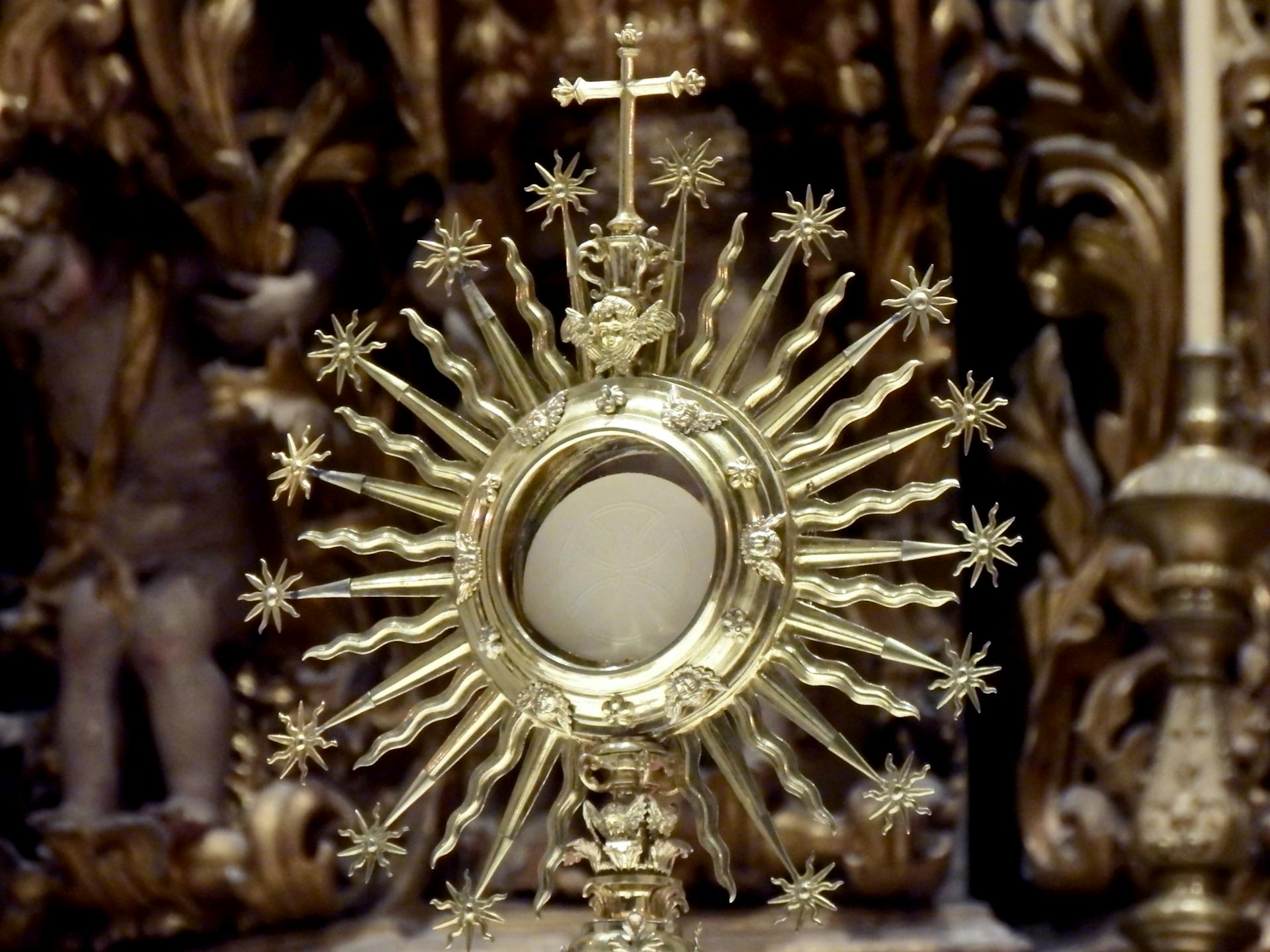
During Lent, many Catholics are drawn to Adoration because it places us directly before Christ's self-giving love. Sitting quietly before the Blessed Sacrament becomes a way of keeping watch with Him, especially as the Church moves closer to the Passion.
This practice has deep roots in Catholic tradition. The Quarantore, or Forty Hours Devotion, originated as a way for the faithful to keep vigil through forty hours of continuous Adoration—mirroring the forty hours Christ spent in the tomb. It was established as a prayer of reparation, a way of standing watch while the world sleeps. When you sit before the Eucharist during Lent, you are entering into this ancient vigil. You are standing in the gap, keeping watch with Christ.
For Those Who Cannot Access a Chapel
Not everyone can travel to Adoration. The elderly, homebound, disabled, rural Catholics, and caregivers face real barriers to chapel prayer.
If You Receive Communion at Home
If you receive Holy Communion at home from a minister of the Eucharist, that time with the Blessed Sacrament—even if brief—is Adoration. The same reverence, the same stillness, the same gaze applies.
If You Cannot Receive the Eucharist at Home
If you cannot receive the Eucharist at home, the practice of spiritual communion and contemplative prayer before a crucifix carries the same posture. The invitation to slow down, to remain present, and to gaze upon Christ is not limited to those who can kneel in a chapel. Whether you pray before the Monstrance or before the crucifix in your home, Lent calls all of us into this deeper stillness with the Lord.
The Desert and the Choice to Adore
Adoration—whether Eucharistic or spiritual—is also where the desert meets the encounter with Christ. In the Gospel, the Spirit leads Jesus into the desert, where Satan's final temptation is this: "I will give you all the kingdoms of the world if you fall down and worship me." Jesus responds: "The Lord your God shall you worship, and Him alone shall you serve."
Time spent in reverent prayer trains us in this same truth. Sitting in silence before Christ, we learn who to adore. We practice choosing God above everything else. The desert of Lent reveals our false worship; prayer reorients it toward the One who deserves it.
This kind of prayer is not about eloquent words or emotional experiences. It is about presence. It is about staying, even when nothing seems to be happening.
Often, the most honest prayer during Lent sounds like this:
"Lord, I am here. I don't know what to say. But I am here."
That prayer is enough.
Why Prayer Can Feel Harder in Silence
Silence has a way of revealing what noise usually hides. When distractions fall away, restlessness often takes their place. Thoughts wander. Time feels longer. Familiar devotions suddenly feel different.
Many people instinctively reach for the rosary during contemplative prayer because it is familiar and comforting. Yet in this setting—whether in a chapel or at home—it can sometimes feel like something to "get through" rather than a way of remaining present.
This tension does not mean the rosary is out of place. It means that contemplative prayer asks the rosary to be prayed differently.
How the Rosary Changes in Contemplative Prayer
In contemplative prayer, the rosary slows down.
- Decades stretch out
- Pauses become longer
- Silence weaves itself between prayers
The goal is no longer finishing all five decades. The goal is remaining with Christ. Each bead becomes a quiet step rather than a task. Each prayer becomes an offering rather than a checkpoint.
From Many Words to Quiet Presence
This is the shift many people experience as prayer matures—from many words toward quiet presence. Prayer that uses lots of words explains, petitions, and expresses. Contemplative prayer, by contrast, simply rests in God's presence. It is less about speaking and more about being seen.
St. John Vianney once noticed an old peasant who would sit for hours in Adoration, seemingly doing nothing. When asked what he did during all that time, the man replied simply:
"I look at Him, and He looks at me."
This is what contemplative prayer trains us to do. In the first half of life, we often feel the need to "do" prayer—to check boxes, say the right words, finish the rosary. As we mature in faith, the invitation becomes simpler: to sit, to remain, and to let Christ look at us with love.
Whether you pray before the Blessed Sacrament or before the crucifix at home, the rosary can become part of this contemplative gaze. The beads give the hands something to do. The familiar prayers keep the mind from wandering too far. But the true work is not in the words—it is in the stillness between them.
What an Adoration Rosary Is
An Adoration Rosary is designed to support this slower, more reverent way of praying. Its purpose is not to replace silence, but to gently guide the body and the senses into stillness.
In these rosaries, the crucifix becomes the visual and spiritual focal point. The design encourages the eyes to return again and again to Christ. Angels in adoration, often present in the crucifix itself, model the posture of prayer: attentive, reverent, and still.
The weight and craftsmanship of the rosary matter here. They slow the hands. They slow the pace. They help the soul resist the urge to rush.
These rosaries are especially suited for Eucharistic Adoration, Holy Hours, and contemplative prayer at home during Lent—and they are meant to continue serving your prayer life long after Lent ends.
What to Do During Contemplative Prayer
If this kind of silence feels unfamiliar or overwhelming, here are a few gentle ways to structure your time without forcing it:
1. Settle First
Don't reach for a book or rosary immediately. Sit. Breathe. Let your body and mind adjust to the quiet. If distractions flood your mind—errands, worries, conversations—acknowledge them briefly and set them aside. You can return to them later. For now, they do not belong here.
2. Read Scripture Slowly
Choose a short passage, perhaps from the Passion narratives. Read one sentence. Close your eyes. Let it rest in your heart. When you are ready, move to the next. Let the words guide you deeper into presence.
3. Pray for Others by Name
This is not a time for long lists or frantic petitions. Simply hold each person before the Lord. Name them. Ask for a specific grace. Move on when you are ready. This kind of intercession becomes an act of love rather than a task.
4. Use the Rosary as an Anchor
If your mind wanders, the rosary can bring you back. Let each Hail Mary be a gentle return to stillness. If you do not finish a decade, that is fine. The goal is not completion. The goal is remaining.
5. End in Silence
In the last few minutes, put everything down. Simply gaze at Christ—whether in the Monstrance before you or in the crucifix on your wall. Let your gaze rest. If your mind drifts, gently return. This is the contemplative gaze St. John Vianney described. This is where prayer becomes presence.
Lent Is the Beginning, Not the End
Although Lent often awakens a deeper desire for silence and contemplative prayer, these habits are not meant to disappear when Easter arrives.
Lent trains the heart in practices meant to last. The stillness learned now carries forward into ordinary time. The reverence practiced during prayer becomes a daily rhythm. The discipline of remaining before Christ shapes how we approach Him year-round.
This kind of prayer is not seasonal, even if Lent draws us into it more intentionally. What begins in Lent is meant to continue.
A Final Invitation
Contemplative prayer does not require perfect words. It does not demand a chapel or special circumstances. Often, the holiest thing we can do is remain.
Whether you pray the rosary slowly before the Blessed Sacrament, sit in silence at home, or simply gaze upon the crucifix, the invitation is the same: stay with Him.
What Lent begins, prayer carries forward.